Delivery and Curbside ID Verification Best Practices
For years, age verification happened in one place: at your counter, under your lights, with your trained staff standing right there. Delivery and curbside blew that model apart. Now the transaction happens in a parking lot, a driveway, or a stranger's doorway, often in the rain, often with a driver who has never worked your door. The rules did not get any softer, though. If a minor ends up holding your product, the fact that it happened three miles away in a Honda Civic will not save you.
The good news is that this is a solved problem. You just have to solve it deliberately, because none of it happens by accident anymore.
Why delivery changed the game
Delivery and curbside are not a fad you can wait out. Order volumes have climbed roughly three hundred percent since 2020, and the broader delivery market now runs into the hundreds of billions of dollars. More than half of customers say they prefer it, most expect same-day service, and a meaningful slice of those orders, around forty percent in age-restricted categories, involve something you are legally required to card someone for.
The trouble is that everything working in your favor at the counter works against you at the curb. You have lost the controlled environment. Your driver is under time pressure with more stops to make. The weather does not cooperate. The customer is sitting in a car, or standing on a porch, and the verification has to happen in a few seconds through a car window. Whether you run third-party platforms, your own in-house drivers, curbside pickup, locker pickup, or some hybrid of all of them, every one of those models pushes the riskiest moment of the sale out of your sight.
What the law actually requires
Federal rules do not bend for convenience. Alcohol delivery still means a hard twenty-one-and-over requirement, a physical ID check, a signature at the door, and no handing product to a third party who happens to be standing there. The person on the order is the person who has to sign. Tobacco falls under Tobacco 21 enforcement, which likewise demands a photo ID, an age check, a signature, and retained records of the whole thing.
On top of that federal floor, every state stacks its own layer. Some permit alcohol delivery freely, others barely at all, and cannabis, tobacco, and pharmacy delivery each carry their own patchwork of permissions and outright bans. States also disagree on the details that matter most in the field, like whether a digital ID on a phone counts, whether a physical card is mandatory, and exactly how long you have to keep the signature and verification records. Before you deliver a single order across a state line, you need to know that state's answer to each of those questions.
Verify before the driver ever leaves
The best delivery verification starts long before anyone knocks on a door. When a customer places an order for an age-restricted product, that is your first and calmest opportunity to check them. Capture an age declaration, let them upload an ID against their account, validate the payment, and flag any delivery restrictions tied to the address. During processing, confirm the age on file, verify the delivery address, run the order against your blacklist, and let a simple risk assessment decide whether this one needs extra scrutiny.
Front-loading the work does two things. It filters out obvious problems before you spend a driver's time on them, and it means the person at the door is confirming an identity you already have reason to trust rather than starting from zero in a dark driveway.
The handoff at the door
The moment of delivery is where compliance is won or lost, so it needs to run the same way every single time. A clean sequence looks like this:
- The driver notifies the customer they have arrived.
- The customer comes to the door or vehicle.
- The customer presents a physical ID.
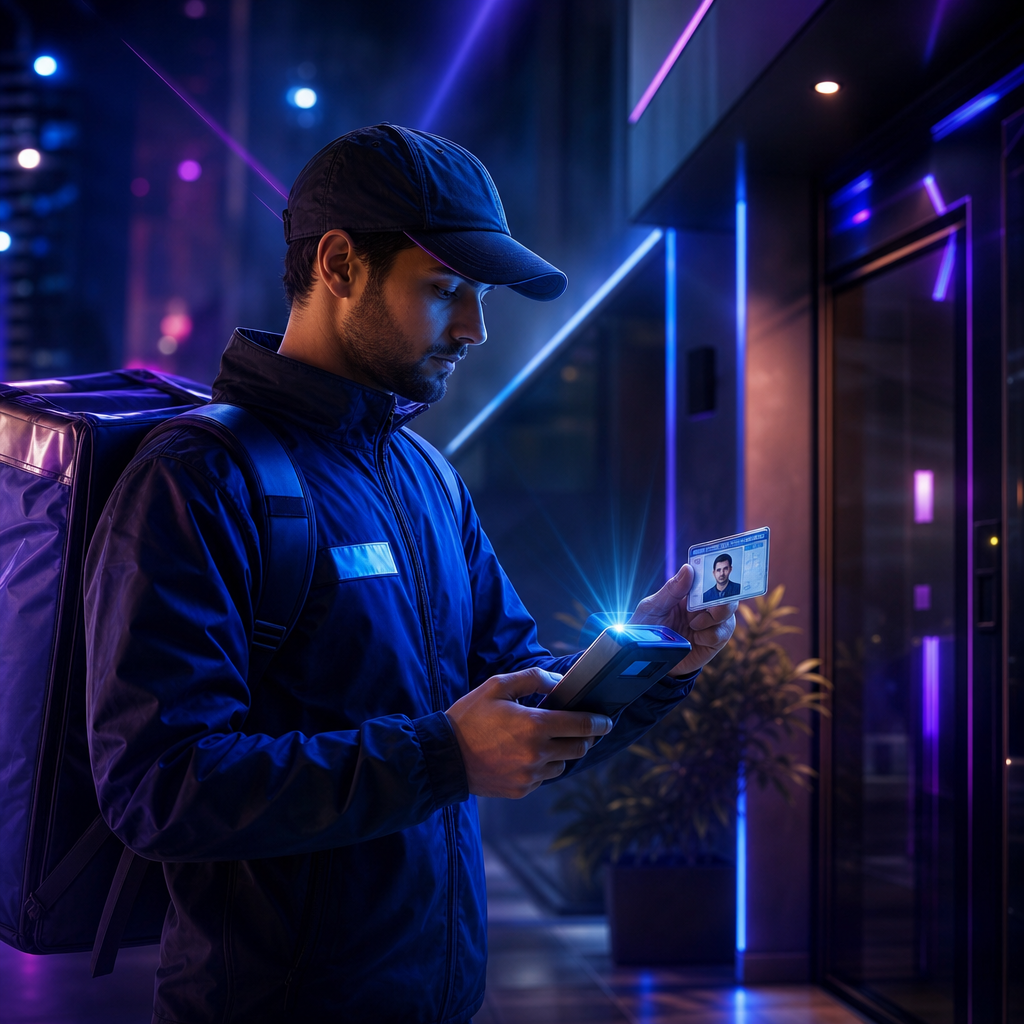
- The driver verifies it, ideally by scanning rather than eyeballing.
- The customer signs.
- The product changes hands.
- The system records that the check happened.
The verification itself is more than a glance. A quick visual inspection catches the obvious problems, but a scanner reads the barcode, does the age math instantly, and confirms the name on the ID matches the name on the order. Then you capture the signature. Skip any of those steps and you are trusting a tired driver to be a fraud examiner, which is exactly the situation you are trying to avoid.
The technology that makes it work
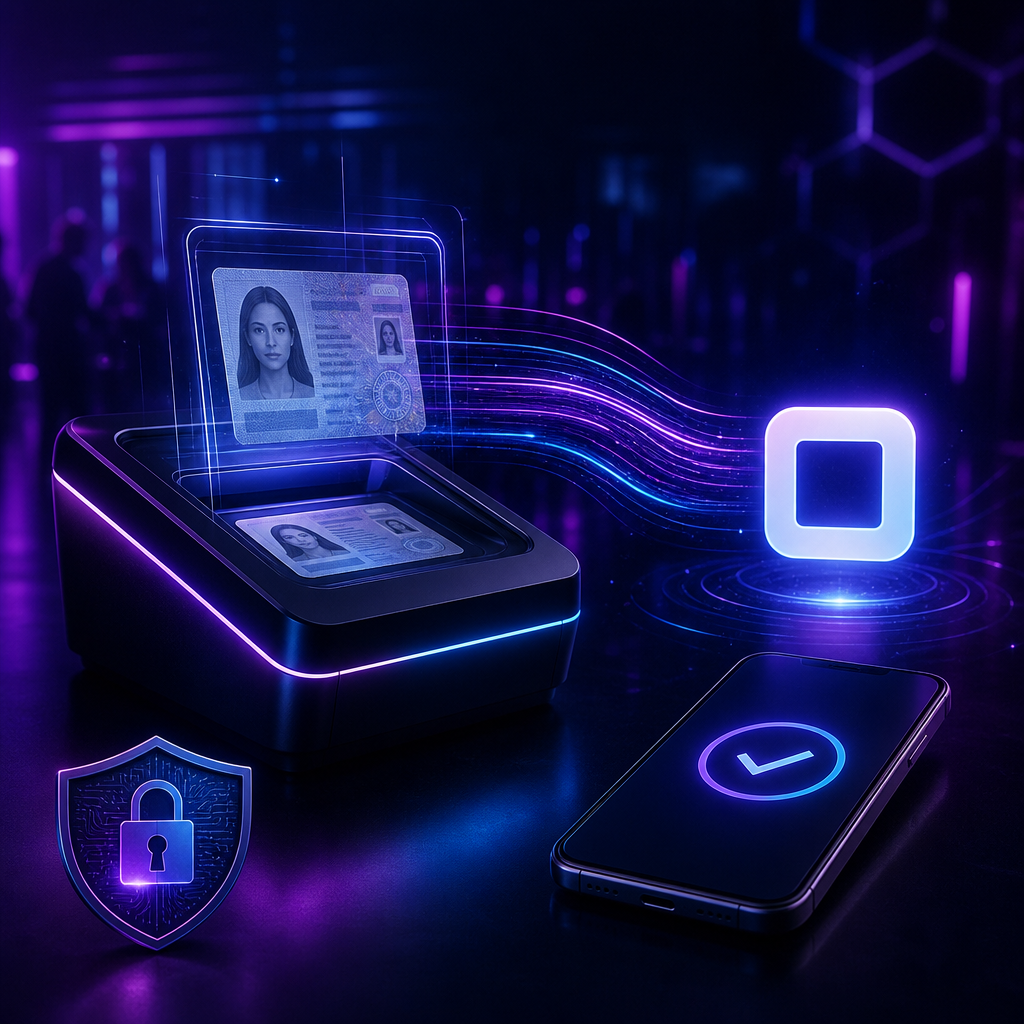
This is not something you can run on good intentions and a clipboard. Handheld scanners give drivers a portable device that validates an ID in seconds, works even when the signal drops, tags the location, and captures the signature in the same motion. For smaller operations, a smartphone app does much of the same job, scanning the ID, verifying in real time, photographing the document, collecting a digital signature, and syncing everything to the cloud so the record exists the instant the transfer happens.
What turns those tools from a gadget into a system is integration. When verification ties into your order management, routing, customer messaging, and compliance reporting, the proof of a proper ID check is created automatically as a byproduct of the delivery, not as a separate chore someone has to remember. ID Verify was built for exactly this: compact scanners and a mobile app that verify instantly, generate the compliance documentation on their own, and come with the training to get drivers comfortable fast.
Curbside is its own discipline
Curbside looks easier than delivery, and that is precisely why it trips people up. The car creates its own set of problems. You are often verifying through a partly rolled-down window, sometimes with passengers in the vehicle, sometimes with multiple orders in one trip, and always with traffic building up behind. Set it up on purpose. Designate the pickup spaces, sign them clearly, give staff some protection from the weather, and put cameras on the area. Then define the flow: the customer checks in, you confirm the order, dispatch someone out, verify the ID, hand over the product, and log it.
The rule that saves you here is simple. You card the person receiving the product, not whoever happens to be driving. A carful of people does not change who signed the order.
When you hand the last mile to someone else
Plenty of operators fulfill through DoorDash, Uber Eats, Instacart, Grubhub, or Shipt, and those platforms can absolutely move age-restricted product compliantly. But using them does not transfer the risk off your books. You remain on the hook, which means you need real agreements that spell out compliance standards, driver training expectations, technology integration, and where liability actually lands. Then you have to verify that those drivers are trained on ID procedures, legal requirements, the technology, and how to handle a refusal, and you have to check that it is holding up through mystery shopping, audits, and performance metrics. A signed contract that says a platform will card everyone is worth nothing if nobody ever tests whether it happens.
Managing the risk you cannot design away
Most delivery violations come from a short, predictable list: nobody checked the ID, product went to a minor, the check was done wrong, the paperwork went missing, or the driver handed off to a third party. Every one of those is preventable with training, decent technology, regular audits, and clear written policies that make individuals accountable. Your legal exposure is broader than it feels, spanning direct liability, vicarious liability for your drivers and partners, regulatory penalties, and civil suits. Protect yourself on every front you can: carry the right insurance, get indemnification language into your partner agreements, and keep the compliance documentation, training records, and audit trails that prove you did things right.
Track a few numbers so you actually know where you stand. Aim for an ID check rate of one hundred percent, verification success above ninety-eight percent, complete documentation on every order, and an incident rate under one percent. When you review transactions, run documentation checks, mystery shop, and observe drivers in the field, those figures tell you the truth faster than any assurance from a platform will.
Keeping it painless for good customers
None of this has to feel like a border crossing to the honest, of-age customer who just wants their order. Verifying at checkout, saving preferences for repeat buyers, and keeping an ID on file for trusted regulars all cut the friction at the door without cutting the compliance. The other half is telling customers what to expect. A quick heads-up through an app notification, a text, or an order confirmation, letting them know they will need a physical ID and someone twenty-one or older to sign, turns a surprise at the door into a formality. People rarely resent a rule they saw coming.
The bottom line
Delivery and curbside verification is harder than checking IDs at a counter, but it is entirely doable. The businesses that get it right are not the ones with the strictest drivers; they are the ones with systems that verify, document, and protect through the whole trip, so the right thing happens whether or not anyone is watching. Build the process for real conditions, back it with technology that does the hard parts automatically, and the cost of staying compliant will always come in well under the cost of a single violation.
If you want a foundation to build that on, ID Verify handles the scanning, the age math, and the recordkeeping so your drivers can focus on getting the order to the right person. Reach out when you are ready to make delivery both convenient and compliant.