Digital IDs Are Here: What It Means for Your Business
For decades the driver's license has been a laminated card that lives in a wallet, gets handed across a counter, and occasionally goes through the washing machine. That is changing. State-issued mobile IDs and digital driver's licenses are rolling out across the country, and they change how you verify age and identity in ways that are worth understanding before a customer taps a phone at your door and your staff freezes.
This is not a someday problem. It is already happening, unevenly, one state at a time. Here is what it looks like on the ground and what you can reasonably do about it.
Where things actually stand
A handful of states have live, legally recognized digital IDs today. Louisiana was early with its LA Wallet app back in 2018. Arizona, Colorado, Maryland, Georgia, and Utah have all shipped programs since, with Colorado's myColorado and Arizona's Apple Wallet integration among the more mature ones. Several more, including California, Ohio, Iowa, Kentucky, Connecticut, Hawaii, Mississippi, and Oklahoma, have programs in flight for the 2024 to 2025 window. The exact list will be different by the time you read this, which is rather the point: expect the map to keep filling in.
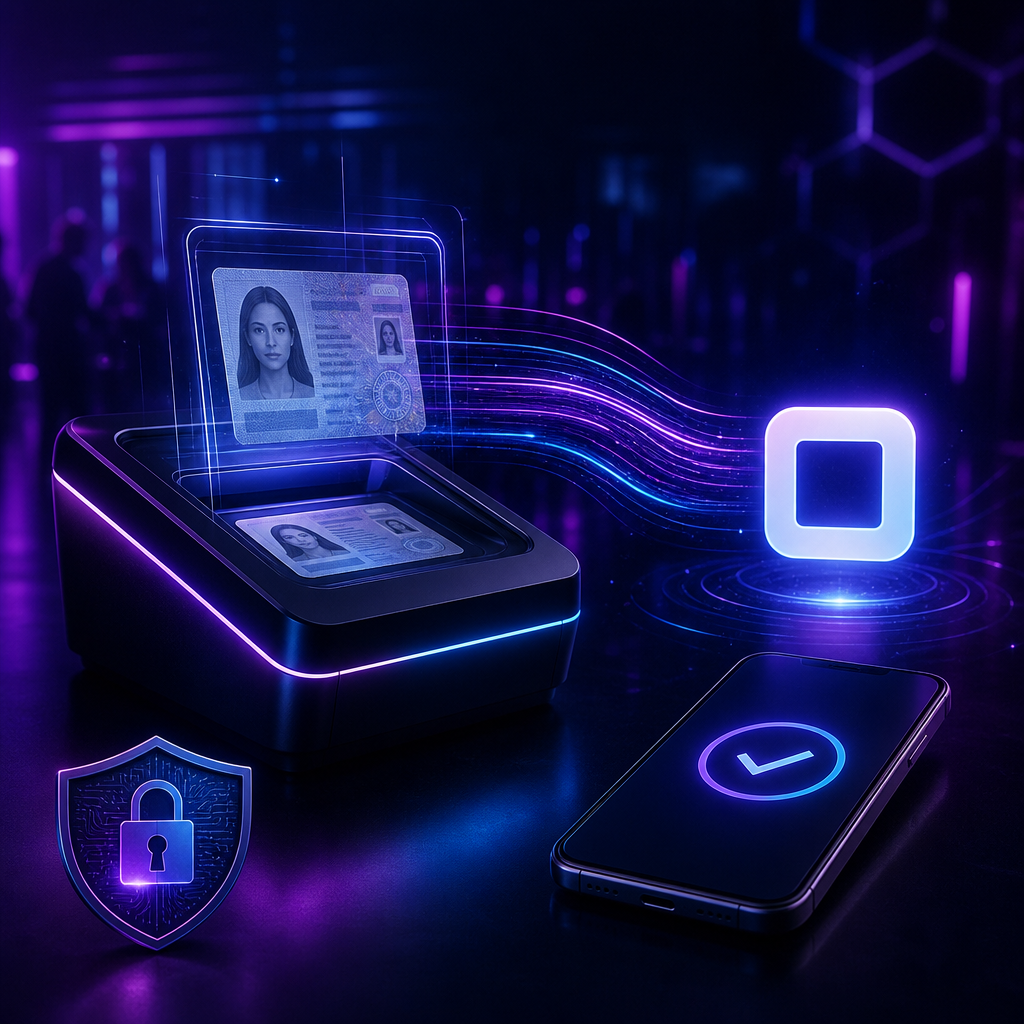
Most of these credentials live in either Apple Wallet or Google Wallet. Apple stores the ID in the phone's secure element, locks it behind Face ID or a passcode, and supports selective disclosure so a bar can confirm someone is over 21 without ever seeing their home address. TSA checkpoints already accept it in participating states. Google's version works similarly on Android, presents through NFC or a QR code, and adds cloud backup. The underlying idea is the same on both platforms: the credential is cryptographically signed, the phone proves it is genuine, and the holder decides what to share.
How a digital ID actually verifies
It helps to know what is happening under the hood, because it explains why these are hard to fake. The credential is protected by several layers at once: the phone unlocks with a PIN or biometric, the ID sits in secure hardware storage, and every presentation carries a cryptographic signature that a reader can check against the issuing state in real time. If a license is expired, revoked, or reported lost, that shows up when it is scanned rather than three weeks later during an audit.
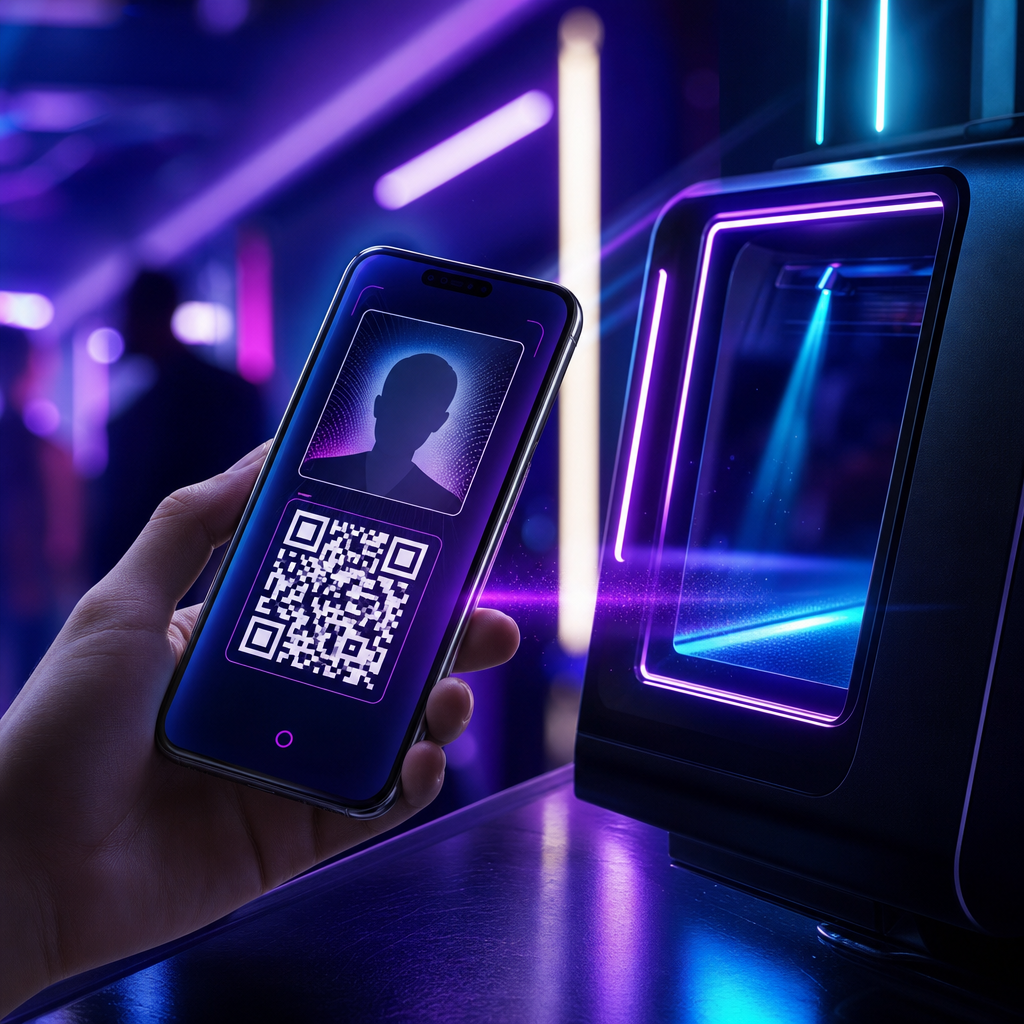
There are two ways a customer hands one over. With NFC, they tap the phone to a reader and the credential transmits encrypted, no physical contact and an automatic log of the check. With a QR code, the phone displays a time-limited, often single-use code that your scanner reads visually, which has the advantage of working even when connectivity is spotty. Either way, the privacy model is built in: the holder consents to the share, only the requested fields go across, and there is an audit trail without any ongoing tracking of the person.
What your business gets out of it
The obvious win is speed. A digital verification resolves in about a second, compared to the ten to thirty seconds a careful manual check takes when someone is squinting at a hologram under bad lighting. Nobody handles a physical card, the relevant data captures automatically, and the line moves. On a busy Friday that difference compounds fast.
Security is the other half. A properly issued digital ID is effectively impossible to forge in the way a laminated fake is, and because validity is checked live, an expired or revoked credential gets caught in the moment. You also get cleaner records almost for free: each scan can create an accurate, timestamped entry, which turns compliance reporting from a shoebox of guesswork into something you can actually pull up. For the customer, the appeal is simpler still. They cannot forget a phone the way they forget a wallet, the credential is always current, and the whole exchange feels modern and respectful of their privacy.
The parts that are genuinely hard
None of this is free or instant. On the hardware side you need NFC-capable devices and scanners, a POS that can talk to them, and a reliable internet connection with a fallback for when it drops. On the software side you need verification apps that stay current, integration into your existing systems, and security practices that hold up. That is real budget and real project management, not a checkbox.
The legal picture is messier than the technology. Acceptance rules vary state by state, federal guidance is still catching up, and legal equivalence between a digital ID and a physical one is not uniform. Some states mandate that businesses accept the mobile credential; others leave it to your discretion. Federal facilities have led on acceptance and the private sector is following, but for now you are operating in a patchwork, and your policy has to reflect the rules where you actually do business.
A sane way to prepare
You do not need to boil the ocean. Think of it in three phases.
Start with education, and start now. Get management and front-line staff comfortable with what a digital ID is, what the security features look like, and how to walk a customer through presenting one without holding up the line. Write down a simple acceptance policy so a new hire is not improvising on a Saturday night.
Over the next few months, look at your technology honestly. Assess what your current hardware and POS can already do, figure out what needs upgrading, price it out, and run a small pilot before you commit. A limited rollout at one register or one door surfaces the awkward edge cases while the stakes are low, and your staff's feedback will tell you more than any vendor demo.
From there, phase into full deployment over the following six to twelve months: activate the systems, get staff genuinely proficient, tell your customers it is an option, and confirm you are meeting the compliance requirements in your state. Treat it as a rollout, not a flip of a switch.
Living in the hybrid period
Here is the reality that matters most for planning. For the next five to ten years you will be accepting both physical and digital IDs, side by side, and you have to be equally good at both. That means training for both, keeping both workflows reliable, and applying one consistent standard regardless of which a customer produces.
It also means no penalty for choice. A guest who prefers to hand you a plastic card should get the same service and the same welcome as the one who taps a phone. Some of your customers will be enthusiastic about going digital and some will not touch it for years, and both are fine. Your job is to make either path smooth.
The direction of travel
The near future points toward tighter biometric matching at presentation, smarter automated verification, and slow progress on shared standards so a credential from one state reads cleanly in another. Further out, the ambition is real interoperability and privacy techniques like zero-knowledge proofs, where a reader can confirm someone is old enough without learning anything else at all. Whether all of that arrives on schedule is anyone's guess, but the trajectory is not really in doubt.
Where ID Verify fits
We built our platform for exactly this in-between era. ID Verify already reads digital IDs alongside physical ones, handles both NFC taps and QR codes, checks validity in real time, and keeps the compliance records you will want when someone asks for them. As states come online and standards shift, we keep the app current so you are not the one tracking every regulatory update.
Digital IDs are the biggest change to identification since the magnetic stripe, and the transition rewards businesses that get ready a little early rather than waiting for it to become mandatory. Learn where your state stands, look hard at your current systems, get your staff comfortable, and plan the upgrades on your own timeline instead of a scramble. The revolution is not coming. It is already at your door, sometimes literally. If you would like a hand getting ready, that is what we are here for.