Nightclub Security: Beyond the Velvet Rope
A great nightclub runs on music, atmosphere, and a crowd that wants to be there. But none of that survives a single bad night. One serious incident, one failed compliance check, one viral video of a fight in your entryway, and the reputation you spent years building is suddenly a liability review. In this business, security isn't the thing you bolt on after the fun stuff. It's the foundation everything else stands on, and the venues that last are the ones that treat it that way.
What you're actually up against
The threats to a busy club come from two directions, and both deserve respect. From the outside, you're dealing with increasingly convincing fake IDs, patrons looking to move drugs, occasional gang tension, and the ordinary escalation of a crowd that has been drinking for four hours. From the inside, the risks are quieter but just as damaging: a staffer taking a cut to wave people past the door, bartenders over-serving, a floor that has drifted over capacity without anyone noticing, an underage guest who made it through, or the kind of predatory behavior you have a duty to stop before it starts.
On top of all that, the people who regulate you are paying closer attention than they used to. Inspections come more often and with less warning. Compliance checks arrive in plain clothes. A community complaint or a bad night posted to social media can put you on a regulator's radar and keep you there. The point isn't to make you paranoid. It's that the margin for sloppiness has gotten thin, and the operators who thrive plan for scrutiny instead of being surprised by it.
Think in layers, not a single door
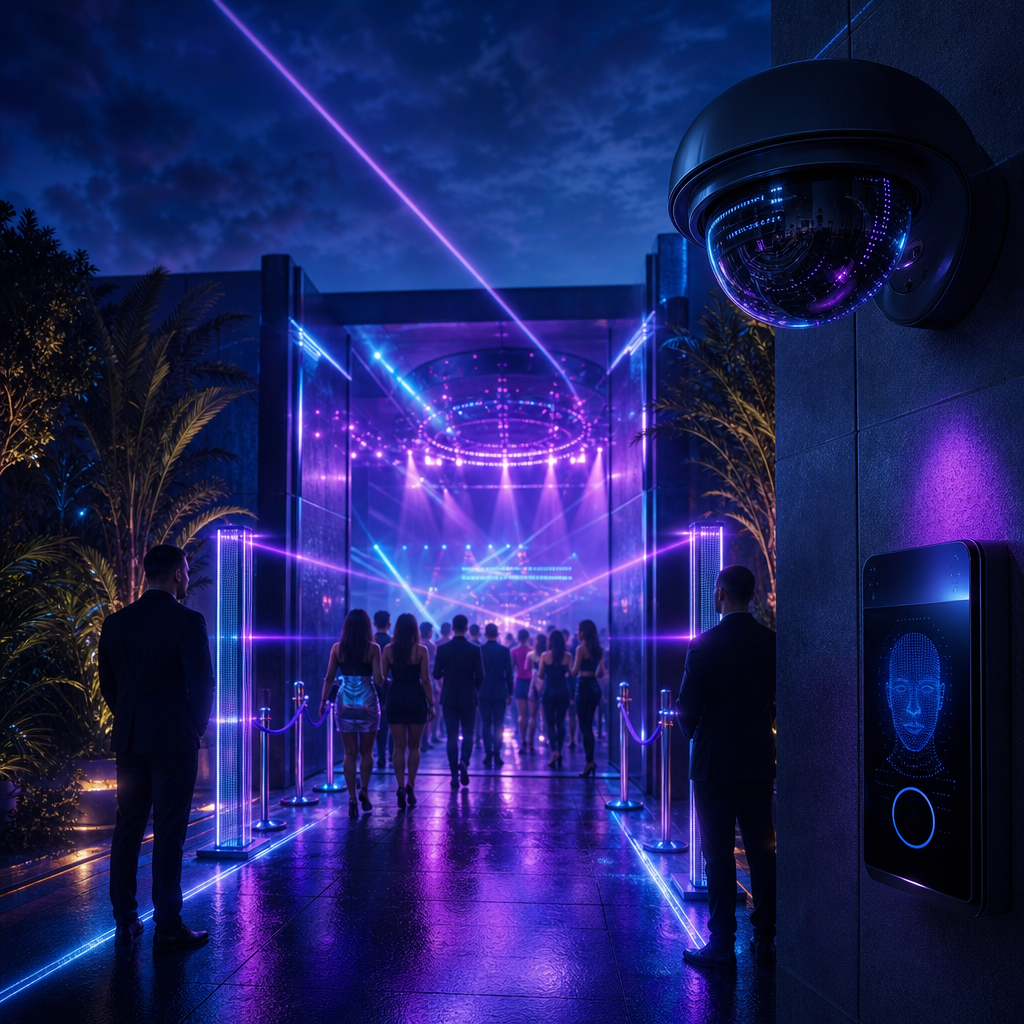
The most reliable way to organize club security is to picture three concentric rings and give each one a clear job. The outer ring is everything before the door: the queue, the sidewalk, the pre-screen. This is where you manage the line, read the crowd, spot the group that's already too far gone, and keep an emergency lane clear. Get this right and half your problems never reach the entrance.
The middle ring is the door itself, and it's where the real gatekeeping happens. ID verification, a weapons check if your venue warrants one, dress code, capacity, and payment all live here. The inner ring is the floor: cameras and staff watching behavior, coordinating on incidents, keeping an eye on VIP areas, and moving as a team when something starts to go sideways. When each ring knows its role, a problem that slips one layer still has two more to catch it.
Verifying IDs when the line is a hundred deep
Checking an ID at a packed door is a different sport than doing it at a quiet restaurant, and the answer is to verify in layers rather than betting everything on one glance. The first layer is your doorperson's own eyes: the quick read of the card, the obvious fakes, and just as importantly the read of the person and the group around them. A card that scans perfectly still tells you nothing about the guy who won't make eye contact.
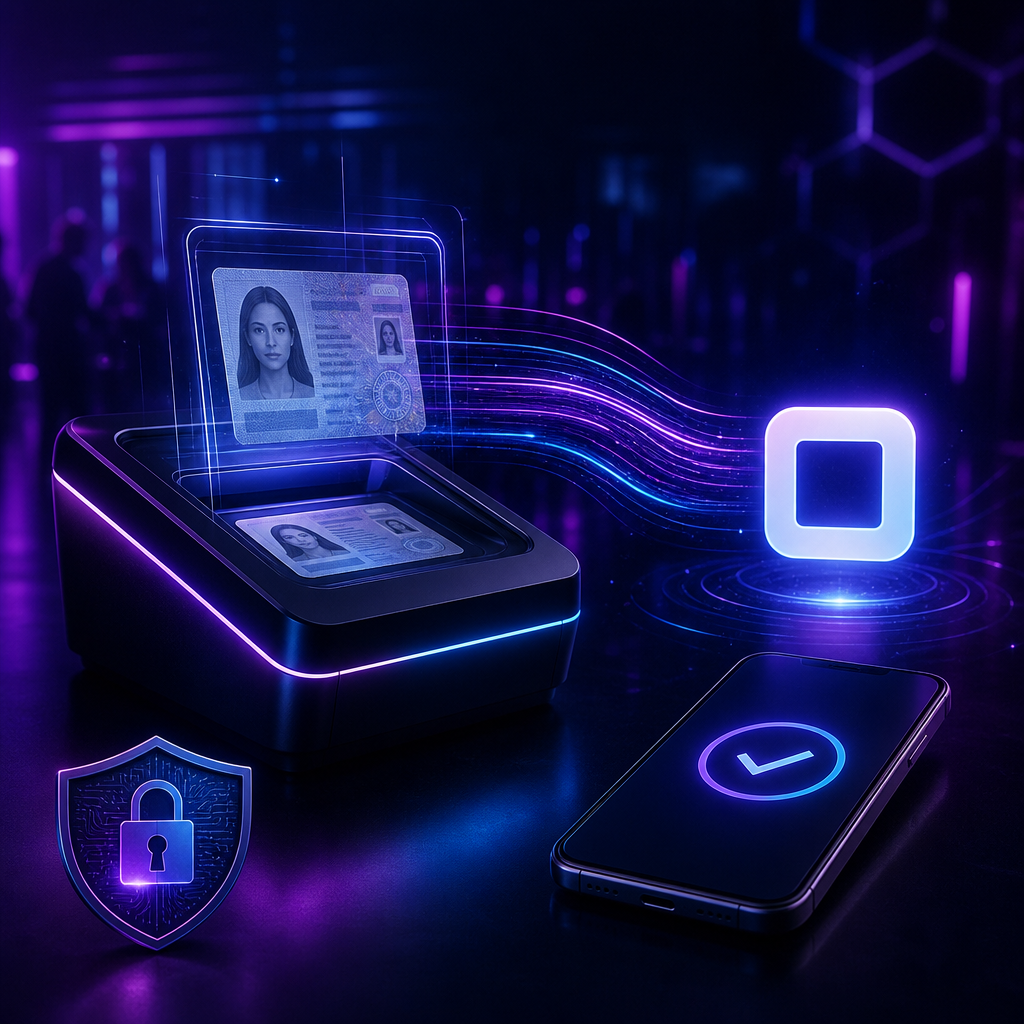
The second layer is the scan. Electronic verification confirms the document is real, checks it against your ban list, and flags anyone tied to a prior incident, all in the couple of seconds it takes to hand the card back. This is where ID Verify earns its keep, because it turns a judgment call into a fast, consistent, documented decision. When something still doesn't add up, a third layer kicks in: a manager takes a look, asks a question the real cardholder would answer without thinking, and makes the final call. Most nights you never need layer three. The nights you do, you'll be glad it exists.
Speed matters just as much as accuracy, because a slow door is its own security risk. Run multiple lanes, give verified regulars and VIPs a faster path, and offer pre-registration for big nights so the bottleneck never forms. Staff the door with people who have specific roles rather than a vague cluster of bouncers, rotate them so nobody's judgment goes dull at 1 a.m., and surge coverage during your peak hours instead of spreading everyone thin all night.
Let technology do the watching it's good at
Cameras, communication, and analytics don't replace good staff, but they extend how much your staff can see. Solid HD coverage of your entrances, floor, and blind spots is the baseline, backed by a radio system that actually reaches every corner of the room. From there, the useful additions depend on your venue: crowd-density monitoring that warns you before a room gets dangerously full, behavior analysis that flags a brewing problem, and access control on the areas that need it.
The quieter value is in the data. Real-time, your system should surface incidents as they happen and let you act on patterns before they become emergencies. Over time, that same information tells you which nights and which spots generate trouble, which patrons keep showing up in incident reports, how your staff are performing, and where your compliance actually stands. That history is what turns security from a nightly scramble into something you can plan around.
Managing the crowd and cooling it down
Capacity is not a guess. Count accurately, watch your zones, understand how people flow from the door to the bar to the dance floor, and always know your exits are clear. Automated counting and heat mapping make this far easier than a clicker and a tired doorman, and a real-time view of the room lets you slow the door before you have a problem rather than after.
When tension does flare, prevention beats reaction every time. The best security teams intervene early, use their words and their positioning before their hands, and quietly change the environment, dimming a corner, cutting a table off, moving a group apart, so a situation defuses itself. If it does escalate, respond in graduated steps as a coordinated team: isolate the people involved, put medical needs first, and know exactly when and how to bring in law enforcement. A measured response protects your patrons, your staff, and your license all at once.
The higher-stakes corners: VIP, bottle service, and big events
VIP and bottle service bring their own wrinkles. High-profile guests want privacy and discretion, which means security that's present without being obtrusive and a plan to get someone out quietly if it comes to that. Bottle service, meanwhile, concentrates a lot of alcohol on one table, so age verification for the whole group matters, over-consumption needs watching, and tab and table disputes have to be handled before they turn into scenes.
Special events raise the temperature further. A high-demand night or a celebrity appearance calls for enhanced screening, extra staff, a clear communication plan, and worked-out exit strategies before the doors ever open. The venues that make these nights look effortless are the ones that over-prepared behind the scenes.
Trained people, ready for the worst night
All of this depends on staff who know what to do when it counts. Your security team needs real grounding in the law, in communication, in your technology, and in physical technique used as a last resort. Beyond that, the specialized skills separate a good team from a great one: spotting a fake ID, recognizing signs of drug use or dangerous intoxication, handling a mental-health crisis with some sensitivity, and responding to a medical emergency without panic.
That last point is worth its own paragraph. Someone on every shift should be trained in first aid, your AEDs and naloxone should be where people can reach them fast, and your relationships with local EMTs and hospitals should exist before you need them. When a real medical emergency hits, the sequence is simple and you rehearse it: make the scene safe, assess the person, call emergency services, control the crowd, and document what happened. The same instinct applies to violence. Learn to read the early signs, aggressive posturing, a group tensing up, someone too far past their limit, and step in to separate people, involve their friends, or make a strategic ejection before fists fly.
Documentation, compliance, and covering the house
None of your good work protects you if you can't prove it happened. Every incident deserves a written report, witness statements while memories are fresh, and preserved video before it's overwritten. Handle physical evidence carefully and keep a clean chain of custody, because the report you write casually tonight may be the document your attorney and your insurer rely on months from now. Build those legal and insurance relationships in advance, and know your reporting obligations to regulators cold.
The through-line for liability is consistency. Clear written policies, enforced the same way for everyone, backed by thorough documentation and the right insurance, are what stand between an unavoidable incident and an avoidable lawsuit. The same discipline covers your alcohol program: track drinks, alert servers, honor cut-offs, and help intoxicated guests get home safely, both because it's right and because it's your best protection when someone's night goes wrong.
Security as a business decision
It's tempting to file all of this under cost. The venues that pull ahead see it as the opposite. Track the numbers that actually reflect a healthy room, incident frequency, injuries, police calls, medical emergencies, and compliance violations, alongside the operational ones like how fast your door moves, how long people wait, how full you run, and how efficiently your staff work. Read together, those metrics show you where safety and profitability reinforce each other rather than compete.
Good security also makes you a better neighbor. Show up to the neighborhood meetings, resolve complaints instead of dodging them, and be a genuine part of your community, and you build the kind of goodwill that matters the night something goes wrong and you need people to give you the benefit of the doubt.
Where ID Verify fits
ID Verify is built for exactly this environment: high-speed scanning that keeps your door moving, ban-list and incident flags that catch the people you've already dealt with, VIP handling, and the incident tracking and compliance reporting that turn a chaotic night into a documented one. It connects to your POS and slots into the rest of your security setup rather than sitting in a silo. But the software is only half the equation. It works because it's paired with trained people and clear procedures, and that combination is what actually keeps a room safe.
You don't want to be the operator who upgrades security the week after an incident. Take an honest look at where you stand now, find the gaps, tighten your technology and your training, and fix your documentation before you need it. Every person who walks through your door is trusting you with their night, and often their safety. Meeting that trust while running a profitable, well-loved venue is entirely doable. It just takes treating security as the foundation it is, and starting before the night you wish you had.