AI-Powered Identity Verification: The Future is Now
For years, "AI-powered" was a sticker vendors slapped on the same old software to justify a bigger invoice. That era is mostly over. The tools that check IDs today actually do the things the brochures used to promise, and the difference shows up where it matters: fewer fakes making it through the door, faster lines, and staff who aren't squinting at a hologram trying to remember what a real one looks like. Here is what the technology actually does now, where it helps, and where you still need a human in the loop.
What the machine is really doing
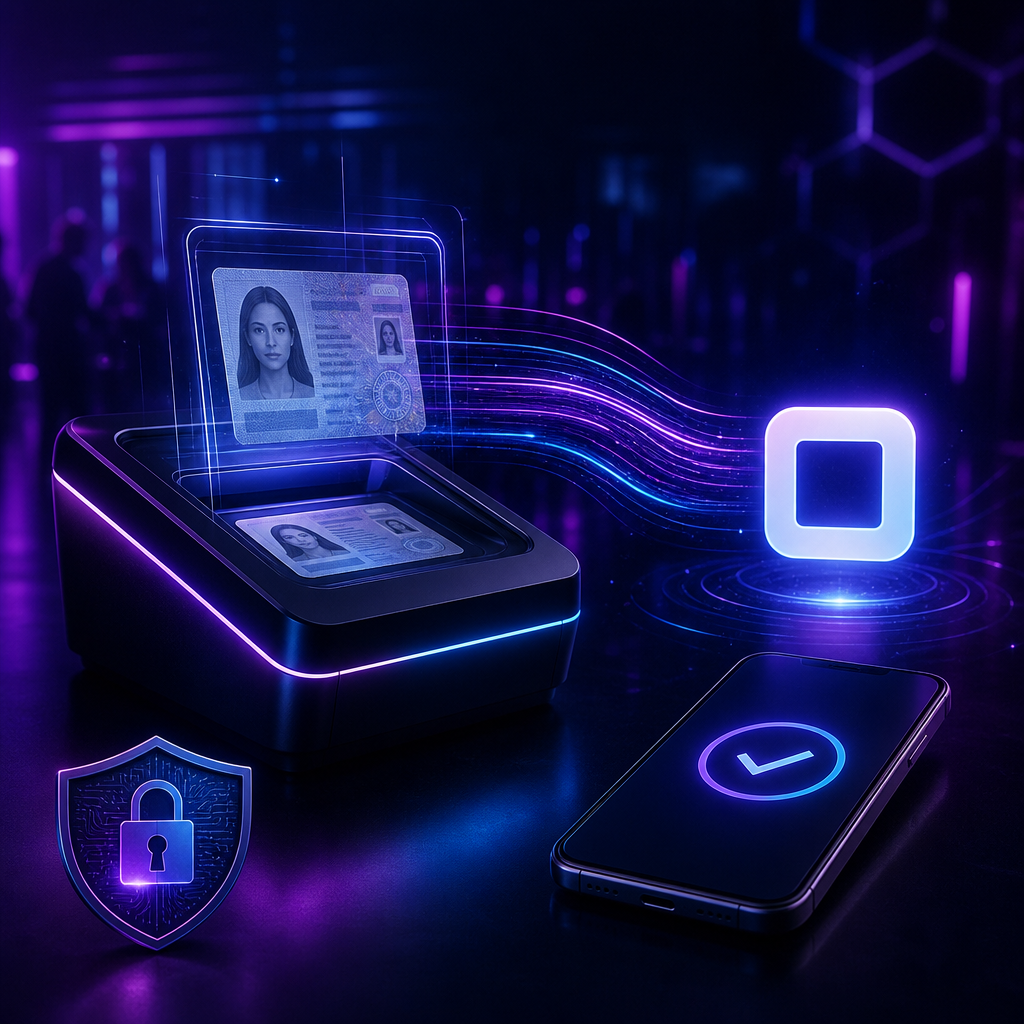
Strip away the buzzwords and there are three things happening when a modern system reads an ID. Computer vision handles the eyes: it reads the text off the card, figures out what kind of document it is, checks the security features, and flags anything that looks tampered with or too blurry to trust. Machine learning handles the pattern-matching: it has seen enough good and bad IDs to spot the anomalies a person would miss and to notice when a run of scans starts looking coordinated. And deep learning handles the hard biometric work — matching a face to the photo, confirming there's a live person standing there rather than a photo of a photo, and estimating age when a card is questionable.
None of that is magic. It's a stack of specialized models each doing one narrow job well, which is exactly why it beats a single tired human trying to do all of those jobs at once at closing time.
Speed and accuracy you can feel
The practical payoff is that verification happens in under a second, with accuracy that lands around 99.9 percent on clean scans. That's not a small improvement over manual checking — it's a different category of reliability. A person doing birthday math in their head miscalculates a few percent of the time on a good night, and a lot more than that on a Saturday. Software doesn't get tired, doesn't get distracted by the line forming behind you, and applies the same rules to the first ID of the night and the four-hundredth.
That consistency is the real win. Human error isn't a character flaw, it's just what happens when you ask someone to run a fraud-detection routine over and over for eight hours. Automating the routine cases means the calculation mistakes disappear and your people can focus on the handful of IDs that genuinely need a second look.
Catching the fakes that fool people
The reason the fraud detection matters more every year is that the fakes have gotten good. We're past the age of a laminated card with a smudged photo. Today's counterfeits include synthetic identities stitched together from real and fabricated data, and deepfake imagery designed to beat a face check. A trained bouncer will still miss a meaningful share of sophisticated fakes with the naked eye — that's not an insult, it's the math.
Modern systems fight back by layering their checks instead of relying on any single one. The document itself gets examined for the right materials and printing. The face gets matched against the photo and tested for liveness. Behavioral and historical signals get folded in, so a card that looks fine on its own but is part of a suspicious pattern still gets caught. Deepfake and synthetic-ID detection sit on top of all of it. No one layer is perfect, but a fake has to beat every layer at once, and that's a much taller order.
The technology underneath
If you want the slightly more technical version, the security-feature work is where computer vision earns its keep: reading microprint, checking watermarks and holograms, analyzing UV features and the texture of the card stock. Alongside that, language processing cleans up the data it pulls off the ID — parsing names, standardizing addresses, interpreting date formats from different states, and cross-checking fields against each other so a mismatch between the printed birthdate and the encoded one doesn't slip by.
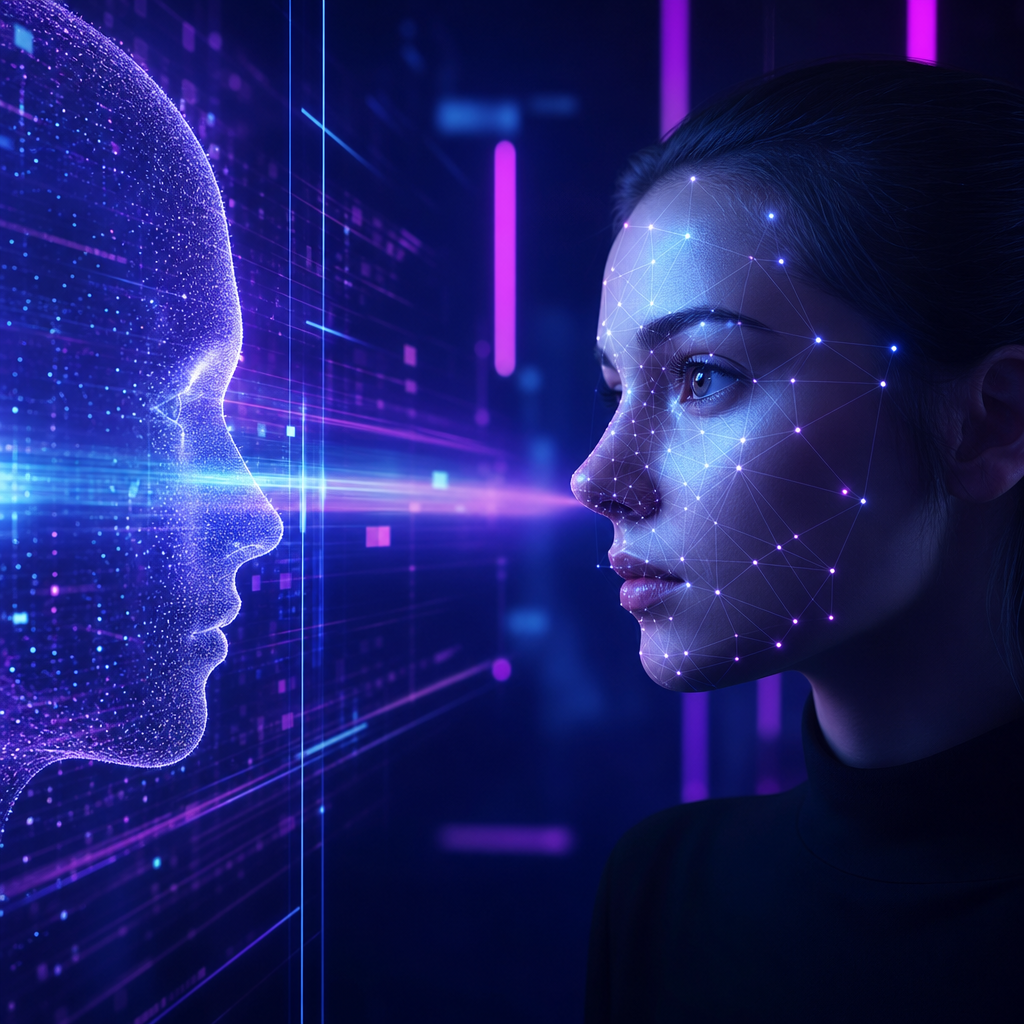
The biometric layer is what most people picture when they hear "AI." Facial recognition maps the face and matches it to a template rather than just eyeballing a resemblance, and liveness detection uses motion, depth, and texture cues to confirm there's an actual living person present and not a screen or a printout. Put together, these pieces do in a fraction of a second what used to require a specialist and a jeweler's loupe.
Rolling it out without breaking things
You don't have to flip a switch and hand the whole operation to a computer overnight. The smart path is gradual. Start by using the system to assist your staff — it flags suspicious documents, gives a confidence score, and speeds up the obvious approvals while a person keeps final say. Once you trust it on the routine cases, let it handle those automatically and escalate only the complex ones, which is where the 24/7, high-volume scaling really pays off. From there you get into the genuinely useful analytics: risk scoring, pattern discovery, and proactive alerts when something looks off across locations.
On the infrastructure side, there's a real tradeoff worth understanding. Cloud-based setups give you scale, automatic updates, and less to maintain yourself. Processing on the device keeps things fast, works when the internet doesn't, and keeps sensitive data local for privacy. Plenty of good deployments use both, doing the time-critical work on the device and the heavier analysis in the cloud.
What it's worth to the business
The operational case is straightforward. You spend less on the labor and training that manual verification demands, you lose less to fraud, and you process more people in less time with the same headcount. During a rush, the system doesn't slow down or ask for a break. Reporting that used to eat someone's morning happens on its own.
Customers feel it too, even if they never think about the technology. Verification is instant, the wait shrinks, and the experience is the same whether it's a slow Tuesday or a packed Friday. Support for multiple languages and formats also means you're not turning away legitimate customers just because their ID doesn't match the one card your staff happens to recognize.
Where you still need people, and other honest caveats
A few concerns deserve straight answers rather than reassurance. Privacy is the big one: any system worth using encrypts its data, keeps only what it needs for as long as it needs it, gets real consent, and leaves an audit trail. If you operate under GDPR, CCPA, or HIPAA, the tooling has to be built to meet those rules rather than bolted on afterward.
Bias is the other honest concern. Facial recognition has a documented history of performing unevenly across different groups, and the only real defense is boring diligence: diverse training data, regular auditing for fairness, transparency about how decisions get made, and a human who can override the machine. That last point is the whole philosophy in one line. AI is fast, consistent, and tireless; people bring judgment, handle the weird exceptions, and know when something feels wrong even if the scan came back green. The goal is to let each do what it's good at, not to replace the person at the door with a black box.
The bottom line
AI-powered identity verification stopped being a pitch and became a practical tool that's faster, more consistent, and harder to fool than manual checking. The businesses getting real value out of it aren't the ones chasing the flashiest demo — they're the ones who rolled it out thoughtfully, kept a human in the loop, and treated privacy and fairness as requirements instead of afterthoughts.
That's the approach ID Verify is built around: serious verification technology that does the heavy lifting while leaving your team in control of the calls that need a human. If you're weighing whether it's time to move past manual ID checks, the honest answer is that the technology is finally good enough to earn its place at your door. Take a look when you're ready.