Pharmacy ID Verification: Controlled Substances and Compliance
Few retail environments carry the regulatory weight of a pharmacy counter. You are dispensing medicine that heals people, and some of that same medicine is worth a fortune on the street or can kill someone who takes it wrong. That tension sits behind every ID check you run. This guide walks through what the rules actually require, where pharmacies get tripped up, and how to keep verification tight without turning every pickup into an interrogation.
The rules you are actually working under
Two forces shape pharmacy ID verification, and they do not always speak the same language. The DEA sets federal expectations for controlled substances, and every state layers its own requirements on top.
On the federal side, Schedule II prescriptions carry the heaviest obligations. You confirm the patient's identity, validate the prescriber, track quantities and refills, and hold onto the records for at least two years. Suspicious order monitoring is not optional either. When the pattern of what is leaving your shelves looks wrong, someone is expected to notice and report it. None of this works without solid patient identification at the point of dispensing, which is where verification earns its keep.
State rules mostly come down to Prescription Drug Monitoring Programs. A PDMP is a real-time database of controlled-substance dispensing, and most states now require you to check it before you hand over certain medications. Many share data across state lines, so a patient filling opioids in three neighboring states no longer disappears into the gaps between jurisdictions. If you override a mandatory check, document why. On top of the PDMP, states set their own photo ID mandates, age restrictions, purchase limits, and reporting duties, so the exact procedure at your counter depends on where you stand.
What triggers a check, and how hard
Not every prescription demands the same scrutiny, and knowing the tiers keeps your line moving.
Schedule II medications sit at the top: opioid pain relievers, ADHD stimulants, certain sleep aids, injectables, and in some states medical marijuana. For these, you want a government-issued photo ID, address confirmation, a validated prescription, a PDMP check, and a signature. Treat any one of those as skippable and you have opened a hole an auditor will find.
Pseudoephedrine is its own regulatory animal thanks to the Combat Methamphetamine Epidemic Act. These products live behind the counter, require a photo ID, and get logged either on paper or, far more commonly, electronically. Daily and monthly purchase limits apply, and the real enforcement happens through NPLEx, the National Precursor Log Exchange. NPLEx blocks a sale in real time when a buyer has already hit their limit, and because it works across state lines, someone trying to hop from store to store gets stopped rather than merely recorded. Law enforcement can see the same data.
Then there is the long tail of age-restricted items that are easy to forget precisely because they feel ordinary: cough syrups containing DXM, emergency contraception, nicotine replacement, certain supplements, and some medical devices. Most carry an 18-and-up rule, a few require 21, and local ordinances or corporate policy can push the bar higher. The safest habit is to let the scanner decide rather than eyeballing whether the customer looks old enough.
Running the counter without slowing it down
A clean dispensing flow for a controlled substance looks the same every time. The patient presents the prescription, you request ID, you scan to verify, you check the relevant database, you document, and only then do you approve and dispense. Six steps, same order, every shift. Driver's licenses and state ID cards handle the vast majority of pickups, with passports, military IDs, and, depending on your state, tribal IDs rounding out what you should accept.
Verifying the person is only half the job. The prescription itself needs a look. Confirm the prescriber and their DEA number, check that the script is authentic and unaltered, and make sure the patient in front of you matches the patient on the paper. Certain patterns should make you slow down: an altered prescription, a patient bouncing between doctors, refills coming in earlier than they should, cash paid to dodge the insurance paper trail, or someone driving from well outside your area to fill here. Any one of these can be innocent. Several together rarely are.
Letting the technology carry the load
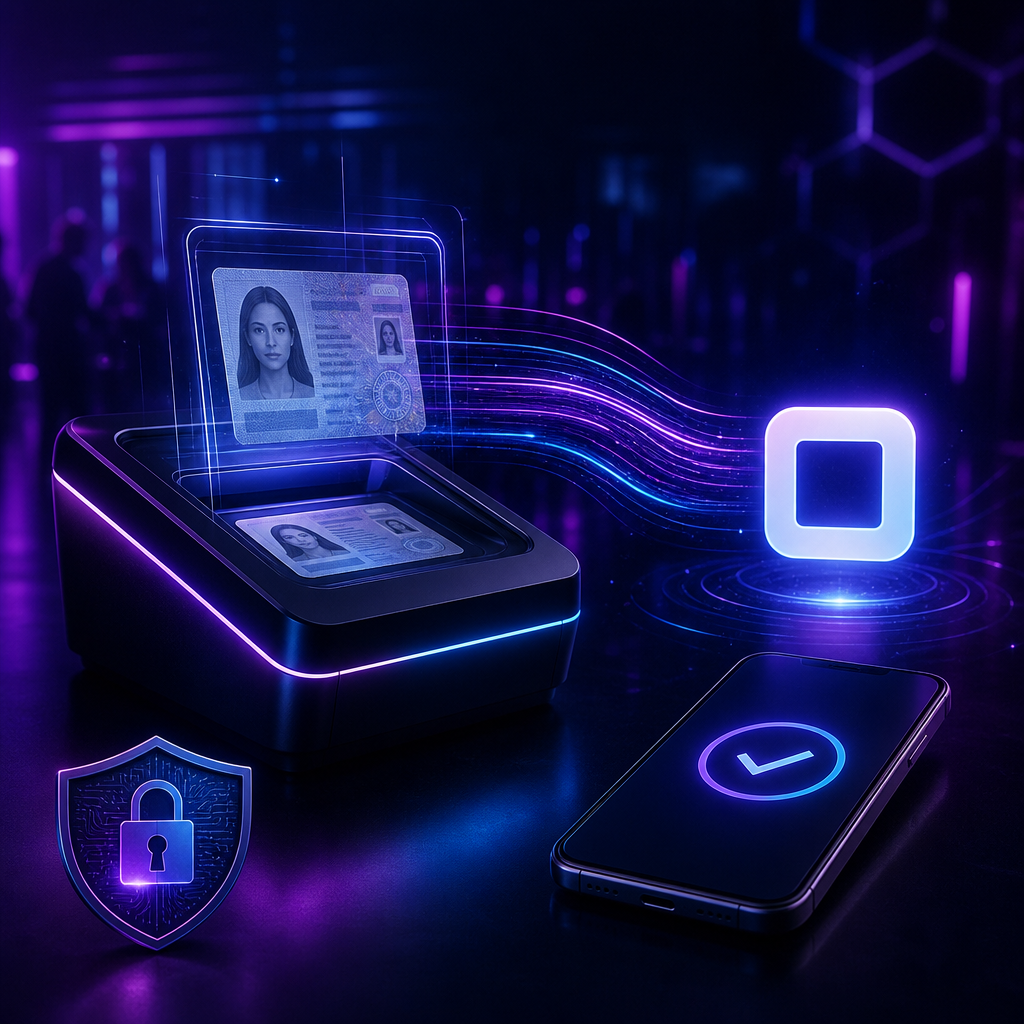
Manual data entry is where errors and wasted minutes live. Connecting ID Verify to your pharmacy management system pulls the patient's information straight off the scanned ID, so it lands in the record accurately instead of being retyped. Tie that into PDMP checks and alerting, and a step that used to interrupt the workflow becomes part of it. The payoff is fewer keystrokes, fewer mistakes, faster pickups, and a clean audit trail that builds itself while you work.
The same logic applies to the specialized tracking pharmacies are legally required to run. Pseudoephedrine sales flow through NPLEx and MethCheck for real-time validation and stop-sale blocking, while controlled-substance dispensing feeds DEA and PDMP reporting, inventory reconciliation, and diversion monitoring. When these systems talk to each other, audit preparation stops being a fire drill and becomes a matter of pulling a report.
Protecting the patient behind the record
Everything you verify is wrapped in HIPAA, and the balance can feel awkward. You need to confirm identity and document it, and you need to collect only the minimum necessary and guard it once you have it. Those goals are compatible, but only if your systems are built for it: protected health information stored in HIPAA-compliant infrastructure, encrypted in transit, reachable only through role-based access, with audit trails, sensible retention limits, and a real plan for breaches. Verification should confirm who someone is without turning their prescription history into loosely held data.
The situations that break the standard script
Real pharmacies deal with people, and people arrive in complicated circumstances. Caregiver pickups are routine for elderly patients, disabled individuals, minors, hospice cases, and long-term care facilities. The process holds up as long as you have patient authorization, the caregiver's own ID, documentation of the relationship, and a record of the handoff. Formalizing it protects the patient and protects you.
Emergencies are the other edge case. A life-threatening situation, a natural disaster, a system outage, or a law enforcement request can force you off the normal path. Overrides exist for exactly these moments, but they come with strings: supervisor approval, enhanced documentation, and follow-up verification once things stabilize. An override without a paper trail is the kind of thing that looks like diversion later, so write down what you did and why.
Building a team that gets it right
Technology cannot verify identity if the person holding the scanner does not understand what they are looking at. Staff need a working grasp of DEA regulations, state law, HIPAA, and your own policies, plus the practical skills to inspect an ID, use the system, and recognize a red flag without tipping off the person in front of them. That knowledge goes stale quickly. Regulations shift, new medications get scheduled, fraud tactics evolve, so annual certification, occasional spot checks, and the odd mystery shopper keep the team sharp rather than complacent.
Fraud, when it comes, tends to follow familiar routes: forged or altered prescriptions, doctor shopping, pharmacy shopping, and outright identity theft. You catch most of it by combining prescription verification, PDMP checks, and the plain human instinct that something is off. When staff suspect fraud, the response should be automatic: do not dispense, retain the prescription, document everything, notify a supervisor, contact the prescriber, and report to the authorities. Staff safety comes first through all of it. De-escalate, lean on your security protocols, and let law enforcement handle confrontation.
Staying ready for the audit
DEA auditors and state board inspectors look at slightly different things, but the preparation is the same: keep good records and never let them drift. Auditors dig into prescription files, dispensing records, ID documentation, inventory, and security. Inspectors add license compliance, patient counseling, and policy adherence. The pharmacies that sail through are the ones running quiet monthly self-reviews, keeping documentation organized and quick to retrieve, and treating audit readiness as a standing condition rather than a scramble the week before someone shows up.
The case for getting this right is not abstract. Tight verification means fewer fines, fewer dispensing errors, less time lost to manual work, and less fraud slipping through. The larger return is the one that does not show up on a spreadsheet: patients who get the right medication safely, regulators who leave satisfied, and staff who trust the system they are working inside.
Where ID Verify fits
Pharmacy ID verification is genuinely complex, and the stakes leave little room for improvisation. ID Verify's pharmacy solutions are built for that reality, connecting DEA compliance, PDMP checking, and NPLEx tracking into one workflow that documents itself as your team works. If your current process depends on manual entry and hope, it is worth a conversation about what a tighter, faster, better-documented counter would look like. Safe and compliant dispensing should be the easy path, not the heroic one.