Bar and Restaurant Security: Beyond ID Checking
Great food and a solid drink program will get people through the door. Keeping them, your staff, and your license safe is a different job, and it doesn't end at the ID check. A checked ID is the first thirty seconds of a long night. Everything that happens after it, from how the crowd flows to how a cut-off gets handled, is where the real risk lives. This is a look at security as an actual operating system rather than a guy on a stool at the entrance.
What you're actually up against
The threats have gotten sharper. Fake ID use is up roughly a quarter over recent years, and the fakes themselves are better than they used to be. Add the usual pressures of the business, late hours, cash on hand, alcohol, and a room full of strangers whose moods shift as the night goes on, and you have an environment where small problems escalate fast if nobody is watching.
The math on getting it wrong is ugly. A single serious incident runs around $45,000 once you tally the medical bills, legal fees, and the night you had to close early. That number doesn't even capture the slow bleed: insurance premiums that creep up after every claim, and the reputation damage that shows up as empty tables three months later. Security isn't a line item you're grudgingly paying for. It's the thing keeping the other line items alive.
The door sets the tone
Everything downstream is easier when the entry point is run well. That means real screening, not a token glance. Your door staff should be verifying IDs properly, managing capacity as it fills, holding the line on dress code, and, in higher-risk venues, checking for weapons. The goal is to filter problems out before they're standing at your bar with a drink in hand.
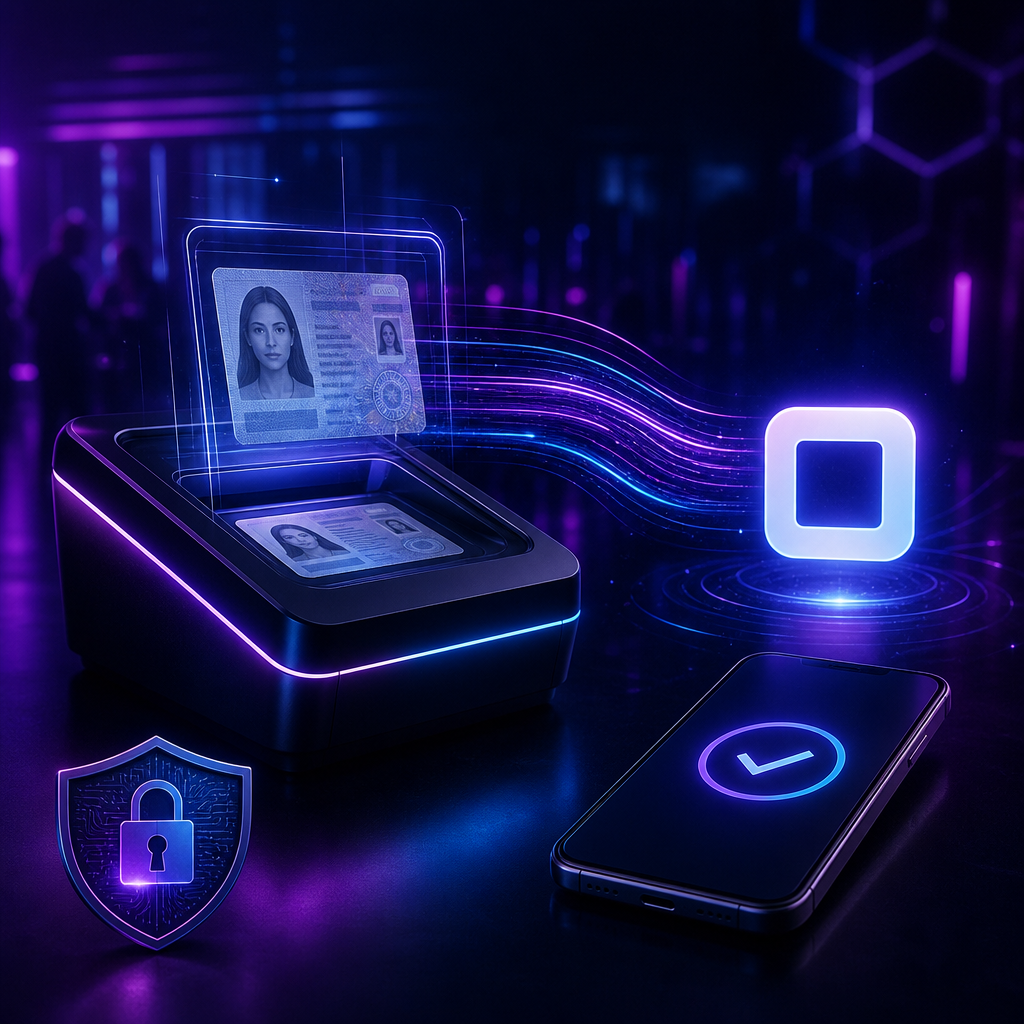
Technology carries a lot of that weight now. A good ID scanner catches fakes and expired cards that the human eye misses at 1 a.m. Pair it with a blacklist database so a person you've already ejected doesn't quietly walk back in an hour later, and keep your door team on a communication system so a flag at the entrance reaches the floor instantly. Metal detection and facial recognition make sense for some rooms and are overkill for others; match the tools to your actual risk, not to a vendor's brochure.
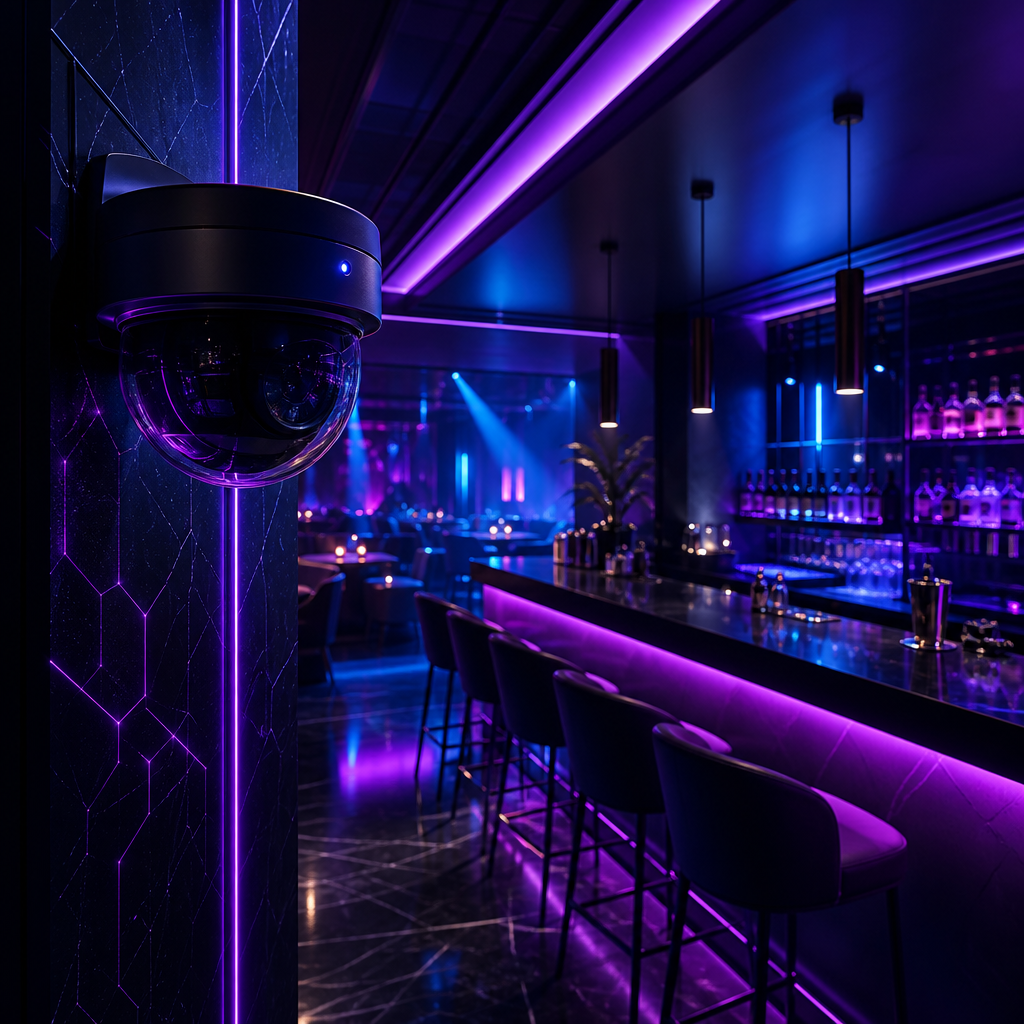
Inside, position matters as much as headcount. Cameras need to cover the entries, the bar, and the parking lot, with the blind spots deliberately designed out rather than discovered after an incident. Lighting should do double duty, setting the mood while keeping sight lines open. Security staff work best on defined zones with a rotation schedule, clear response procedures, and a backup plan for when one person is suddenly dealing with two things at once.
Getting ID verification right
The most reliable checks layer a few methods rather than trusting any single one. A practical sequence looks like this:
- Look at the card. Physical alterations, mismatched fonts, and soft edges are still the most common tells.
- Hit it with UV light to confirm the security features that fakes routinely skip.
- Scan it to validate the encoded data against what's printed on the front.
- Check it against your database and blacklist.
- Read the person. Nervousness, a rehearsed birthdate, or a friend answering for them tells you as much as the plastic does.
Beyond the card itself, pay attention to patterns. Groups that split up to approach the door separately, people who time their entry to a shift change, or a payment method that doesn't match the story are all worth a second look. None of these are proof of anything on their own, but together they're a reason to slow down.
This is where ID Verify does the heavy lifting. Scans finish in about two seconds with real-time validation, automatic age calculation, and a blacklist check built in, so your door staff aren't doing fraud detection and birthday arithmetic in their heads while a line backs up behind them. Every scan lands in an audit trail, which matters more than it sounds like it does when a regulator or an insurer comes asking what happened on a given night. It also connects to your POS, cameras, and access control so the whole operation shares one picture instead of five disconnected ones.
Managing the crowd before it manages you
Capacity control is the quiet backbone of a safe room. Electronic counting and zone tracking tell you where people actually are, not where you assume they are, and let you see a crush forming before it becomes a fire-code problem. When you hit the ceiling, a real overflow plan, a waiting list, reservations, VIP prioritization handled without drama, keeps the sidewalk calm instead of turning it into a second, unsupervised venue.
Most conflict is cheaper to prevent than to resolve. A lot of that is environmental: pacing the service, keeping the lighting from dropping into pitch black, and reading the music, because a room's temperature changes with what's coming out of the speakers. When something does start to turn, the ladder is simple. Intervene early, talk it down, separate the parties, and only then move to removal. Keep a working relationship with local law enforcement so that when you do need them, they already know your room. Every removal should end with a note in the record, not just a shrug.
Responsible service is a security function
Over-serving is a liability problem wearing a hospitality costume. Train your bartenders and servers to actually watch intake and behavior, to run a cut-off without turning it into a scene, and to offer water, food, and a safe way home instead of just a flat no. The signs of intoxication are learnable, and the intervention techniques that keep a cut-off from escalating are a skill like any other. Document the refusals. A written note that you stopped serving someone is the difference between a defensible decision and a he-said-she-said if that person ends up in an incident later.
The service model itself can do a lot of the work. Sensible pour sizes, deliberate pacing, water within easy reach, food that's easy to order, and a last-call routine that everyone runs the same way all keep the room from tipping over in the first place. Nobody notices good pacing. Everybody notices the fallout when it's missing.
When something goes wrong
Good procedures are the ones your staff can run without thinking, because the moment they're needed is the moment nobody has spare attention.
For a medical emergency, the order is: make the scene safe, deliver first aid, call emergency services, document what happened, and follow up afterward. For a security incident, contain it first, coordinate your staff, involve law enforcement, preserve the evidence, and file a report. Drilling these until they're muscle memory is worth more than any single piece of equipment.
Documentation is where a bad night either stays contained or turns into a lawsuit you lose. Capture the time and date, who was involved, witnesses, the actions your staff took, and any evidence collected. Preserve the video before it's overwritten, take photos, get written statements while memories are fresh, and file the required reports with the authorities and your insurer. Do this every time, even for incidents that feel too minor to bother with, because you rarely know in the moment which one will matter in six months.
Building it into the culture
Cameras and scanners are only as good as the people using them. Regular training on threat recognition, response procedures, and the legal ground your staff is standing on keeps skills from going stale, and scenario work, mock incidents and role-play, turns knowledge into reflex. Threats change, technology changes, and the law changes, so treat training as ongoing rather than a box checked once at hire.
There's a real return underneath all of this, even if the marketing-brochure percentages deserve some skepticism. Venues that take security seriously typically see meaningfully fewer incidents, softer insurance costs over time, and a revenue lift that follows from a room where people feel comfortable enough to stay and spend. A safe room is a room people come back to. That's the whole business case, and it's not complicated.
The point isn't to turn your bar into an airport checkpoint. It's the opposite. When the security layer is doing its job quietly in the background, your guests feel looked after rather than policed, and your staff can focus on hospitality instead of bracing for the next problem. ID Verify is built to be that quiet layer at the door, fast, accurate, and connected to the rest of your operation. Pair it with real training, clear procedures, and a team that buys in, and you get a venue where everyone can actually enjoy the night. The best time to build that program is before the incident that makes you wish you had.