Event and Venue Security: Managing Large Crowds Safely
There is a particular kind of pressure that comes with a line of ten thousand people waiting to get through your gates before the headliner goes on. Everyone wants in at once, half of them have been drinking in the parking lot, and the difference between a smooth night and a lawsuit often comes down to how fast and how well your people can work the front door. Large events are not just bigger versions of a busy bar. They are their own animal, and they reward planning the way few other operations do.
This is what we have learned working alongside the teams that run concerts, festivals, stadiums, and conferences: the security you can see at the gate is only the part of the iceberg above the waterline. The rest of it happened weeks before anyone showed up.
Know what you are actually protecting
The word "event" covers a lot of ground, and each size brings its own math. A community fair might see a few hundred to a few thousand people. Conferences run from around five hundred to ten thousand. Concerts land anywhere between a thousand and fifty thousand. Sporting events fill five to eighty thousand seats. Music festivals are their own category entirely, routinely pulling ten thousand to well over a hundred thousand across multiple days and stages. The plan that works for a wine tasting will get people hurt at a festival, so the first honest conversation is about scale.
Once you know the size, you can name the real risks. Some are human and predictable: underage drinking, fake IDs, fights that start over nothing, people who have had far too much and need help. Others are structural, like overcrowding at a single choke point or a VIP entrance that becomes a soft spot because nobody wants to hassle the important guests. And some you cannot control at all, like weather or a medical emergency in the middle of a packed floor. Your job is not to pretend none of it will happen. It is to know where your gates, bars, backstage doors, parking lots, and perimeter are weakest, and to decide in advance who handles what when it does.
Build the plan in layers
Good event security is layered, like an onion, so that no single failure lets everything through. It starts at the outer perimeter, moves to the entry checkpoints where credentials and IDs get verified, continues into the internal zones where the crowd actually lives, tightens again around restricted and backstage areas, and always, always keeps the emergency exits clear and obvious. Each layer buys you time and information before a problem reaches the next one.
From there it becomes a resourcing question. How many security and ID-checking staff per thousand attendees, positioned where. What technology goes where, and what happens when a piece of it fails. How your radios and command center talk to each other, and how all of that connects to the medical team and the local police liaison. None of this is glamorous. It is spreadsheets and walkthroughs and arguments about staffing ratios. It is also the reason the fun nights stay fun.
Move the line without losing the door
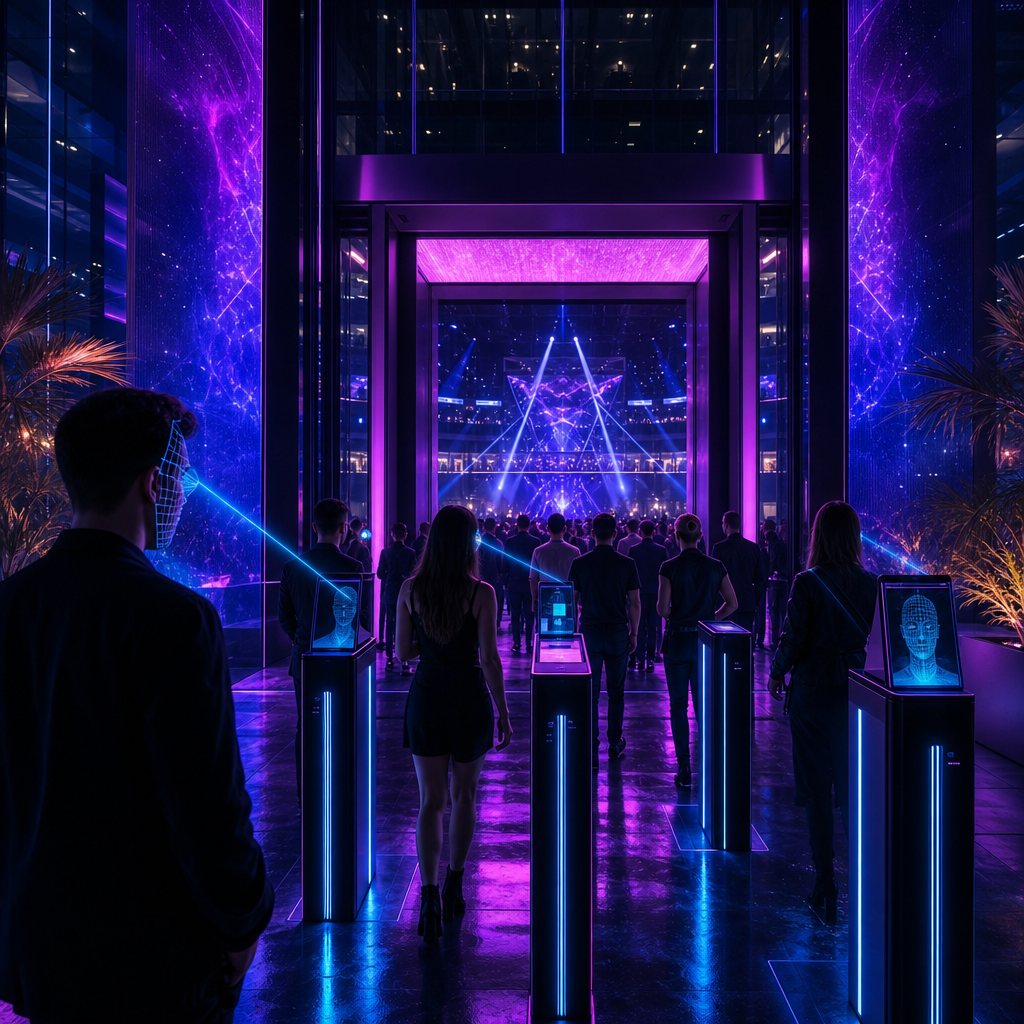
The entry gate is where most of your reputation gets made in the first hour. People form their opinion of the whole event standing in that line, so the goal is to keep it moving without waving anyone through unchecked. Multiple lanes help, as do express lanes for VIPs and anyone you verified ahead of time. Overflow space, a little shade or shelter, and something to look at all take the edge off a wait that would otherwise turn ugly.
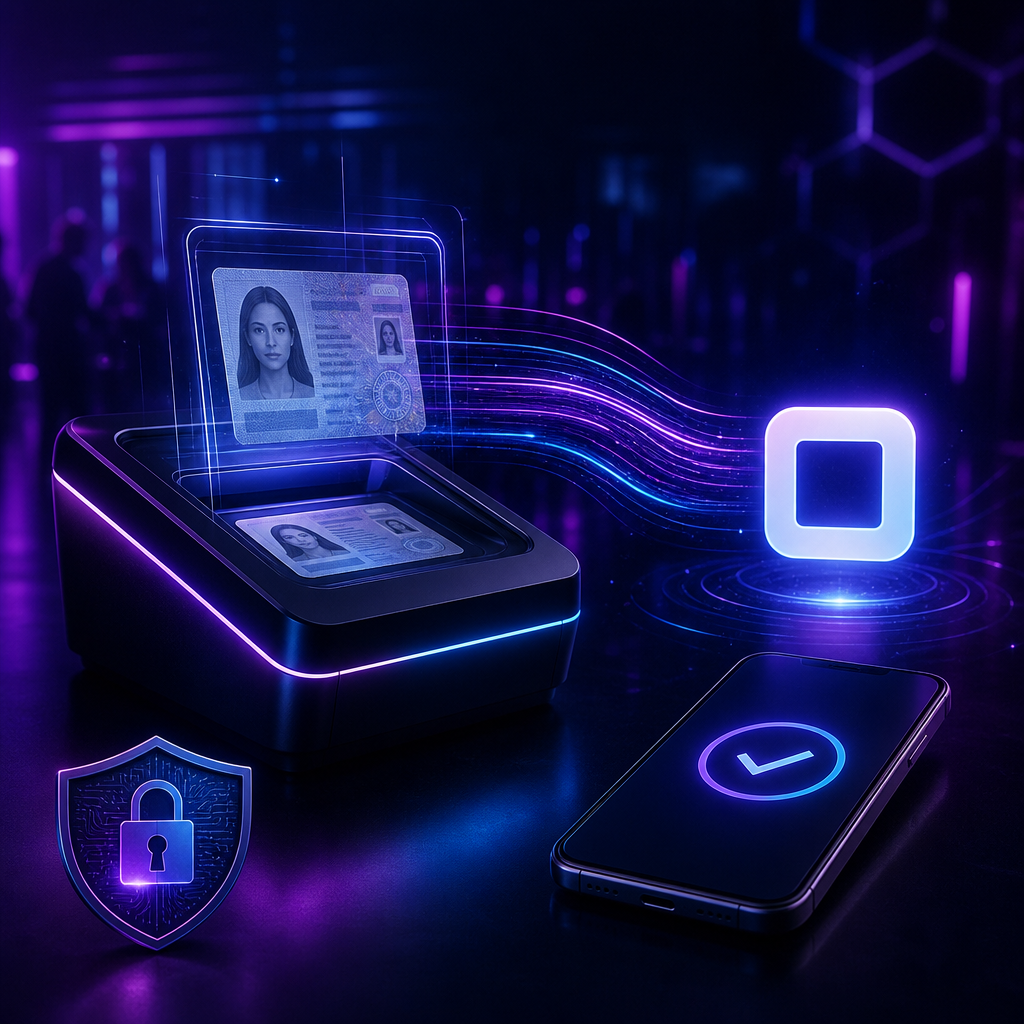
The real speed comes from technology and sequence. Verifying attendees before the event, whether through mobile ticketing or pre-registration, takes load off the gate. At the gate itself, the flow is straightforward: validate the ticket, run the security screening, verify the ID, apply the wristband, and confirm entry. The bottleneck is almost always the ID check, which is exactly where a two-second scan changes the whole equation. ID Verify handles that step in roughly two seconds per guest, works across networked stations and mobile units so you can add capacity where the line backs up, and feeds everything to central monitoring so you can see which gate is drowning and move people there before it becomes a crush. Wristbands then become the credential inside, which keeps you from re-checking IDs at every bar.
Keep alcohol from becoming the story
Alcohol is where a lot of event security actually lives, because it touches beer gardens, VIP bars, concession stands, roaming vendors, and hospitality suites all at once. The cleanest system is to verify age once, at wristbanding, and then trust the band at every point of sale after that. It is faster for your bartenders and far more consistent than asking each of them to make an age call under stage lights at midnight.
The wristband also does quiet work beyond age. Tie it into your point-of-sale and you can enforce purchase limits, apply time-based cutoffs late in the night, and keep a purchase history that helps your staff spot the guest who is heading for trouble. Combine that data with old-fashioned human observation, so the person watching the crowd knows when to slow someone down and when to loop in medical. Sober cutoff calls are never fun to make, but they are a great deal easier when the system and your people are seeing the same picture.
Manage the crowd and plan for the worst
Crowd control comes down to flow and density. Where people enter and exit, how they route between stages or concourses, where the barriers and signage go, and where staff stand all shape whether the crowd breathes or bunches. Watching capacity by zone in real time lets you adjust before a section gets dangerously tight, redirecting foot traffic or opening another route while it is still a nuisance rather than an emergency.
And you plan the emergency you hope never comes. That means more than one evacuation route, clearly marked assembly points, and a communication protocol where every staffer knows their role without waiting to be told. It means first aid stations that are easy to find, ambulance access that stays clear no matter how packed the lot gets, and a triage plan worked out with the local hospital in advance. Weather deserves its own contingency: monitoring, shelter, an evacuation trigger, and gear that keeps working when it rains. Weatherproof scanners, covered stations, and generator backup are not luxuries at an outdoor event. They are the difference between pausing entry and shutting the whole thing down.
Restricted access and the people who need it
VIP and artist areas are a soft target precisely because everyone is inclined to be polite there. A tiered credential system with photo badges, defined zones, escort requirements, and time limits keeps the polite instinct from becoming a security hole. High-profile guests warrant their own advance planning, from private entrances and secure transport to a safe room and priority on the radio, all worked out before they arrive rather than improvised when they do. The principle is simple: the more important the person, the more disciplined the access, not less.
The people running it, and what happens after
All the technology in the world falls apart without trained staff who know the plan. Security personnel, ID checkers, crowd controllers, and medical staff each need an event-specific briefing, hands-on time with whatever tools they will use, and a clear chain of command running from the command center down through zone supervisors and team leads to the front line. When something goes wrong, and at a big enough event something always does, the response should already be muscle memory: assess it, deploy the right people, contain it, resolve it, document it, and review it honestly afterward. Good documentation is not bureaucratic box-checking. It is what protects your organization when the incident becomes a legal question months later, and it is where next year's improvements come from.
That post-event debrief is worth taking seriously. Pull the numbers on entry throughput, incident rates, and queue times, listen to what your front-line staff actually saw, and be willing to change policy based on it. The events that get safer year over year are the ones that treat every show as a rehearsal for the next.
Where this is heading, and where we come in
The tools keep getting better. Drone surveillance, AI-assisted crowd analysis, and predictive modeling that flags a building crush before human eyes catch it are moving from pilot projects toward everyday use, and virtual queuing is already trimming the physical lines that cause so many problems. None of it replaces judgment. It just gives your team a clearer picture, sooner.
Successful event security is meticulous planning, dependable technology, and clean execution, and the stakes are genuinely high. One breach can turn into tragedy, liability, and a reputation you spend years rebuilding. ID Verify was built for the volume side of that equation, scaling to thousands of verifications an hour without letting compliance or documentation slip. If you are putting on something big and want the front door to be an asset instead of a liability, we would be glad to help you build a program that keeps every event memorable for the right reasons.