Mobile ID Verification Trends for 2024-2026
For most of the last century, checking an ID meant one thing: a plastic card slid across a counter, held up to the light, maybe flexed to feel for a fake. That is changing. More of your customers now carry their driver's license in a phone, and the ones who don't yet will soon. If you scan IDs for a living, it pays to understand where this is going before it shows up at your door on a Friday night.
This is a practical look at mobile driver's licenses, the standards behind them, and what a working business should actually do about it.
Where mobile IDs stand today
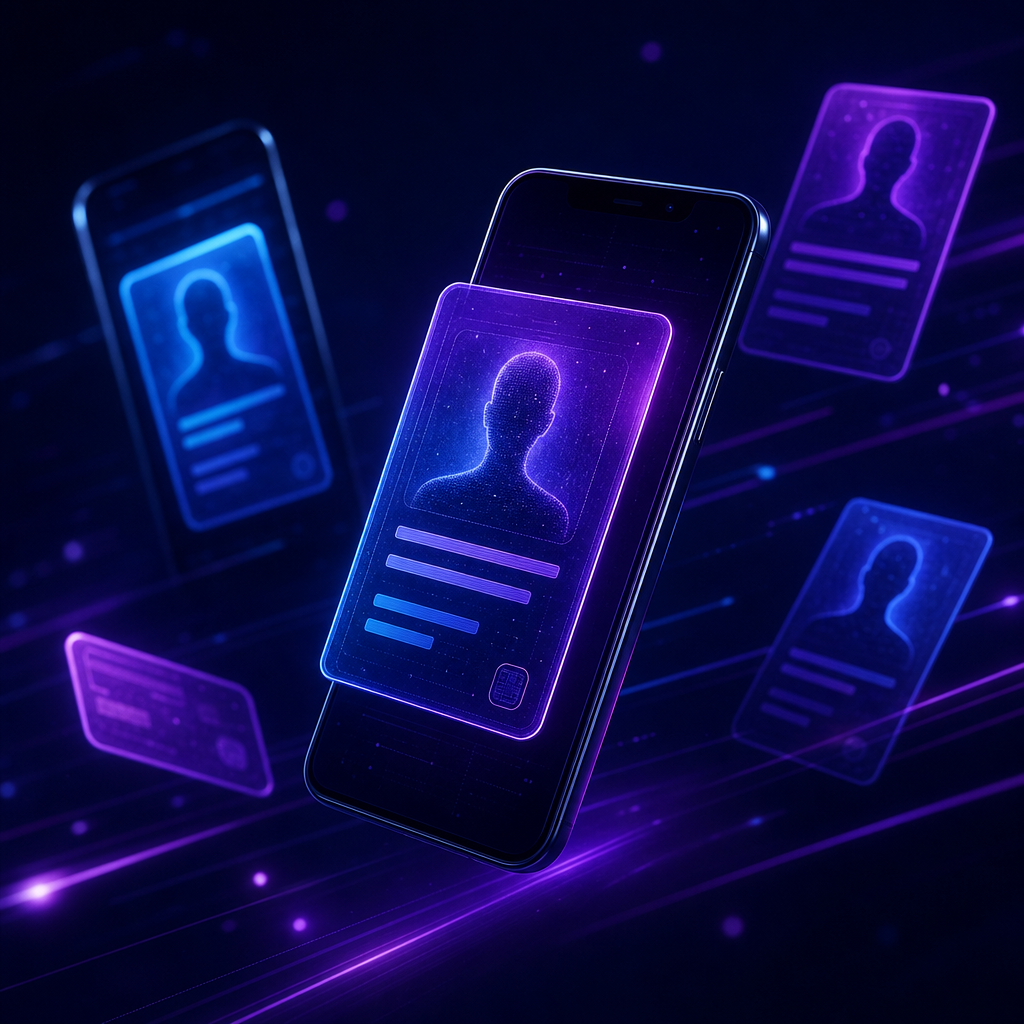
Mobile driver's licenses, usually shortened to mDLs, are no longer a demo reel. Arizona has been running a full deployment since 2021, Colorado offers them statewide, and Louisiana's LA Wallet is a genuine everyday tool for residents there. Utah's pilot keeps expanding, Maryland launched recently, and Georgia has been rolling out through 2024. Behind them, the bigger states are lining up: California is testing, New York is in development, Florida has passed the enabling legislation, and Texas has implementation on the calendar.
The pattern is worth noticing. This isn't a handful of tech-forward states experimenting in isolation. It's a steady march that will, within a couple of years, mean a real share of the IDs you see are digital. Planning around that now is a lot cheaper than scrambling later.
The standards that make it work
None of this would matter if every state invented its own incompatible format. The thing keeping it sane is a standard called ISO 18013-5, the international spec for mobile driver's licenses. It defines how the credential is stored in a secure element on the phone, how it's read over NFC or a QR code, and how privacy-preserving features work so a customer isn't handing over their entire life to buy a six-pack. Because it's a shared standard, an mDL issued in one state is built to be read by compatible hardware anywhere.
On top of that sits the wallet layer most people actually touch. Apple Wallet and Google Wallet both support mDLs now, Samsung has its own integration, and several states run their own dedicated apps alongside third-party platforms. For you, the takeaway is simple: you are not verifying "an app," you are verifying a credential that happens to live in whichever wallet the customer prefers.
What businesses and customers actually get
The security story is the easy sell. A mobile ID is cryptographically signed by the issuing state, which means you can validate it in real time against the issuer rather than squinting at a hologram. The credential is tamper-resistant in a way a laminated card never was, it's protected by the phone's own biometrics, and the whole design cuts down the kind of fraud that thrives on convincing physical fakes.
The operational upside is real too, though less dramatic. Verification is faster and more automated, which trims the manual mistakes that creep in during a rush and keeps a line moving. For the customer, it's contactless and quick, and it uses selective disclosure, so an age check can confirm someone is over 21 without exposing their home address. People like that. They also like that their license is always with them, backed up, and doesn't get left in the other jacket. Consent and privacy controls put them in charge of what gets shared, which tends to lower the friction and the suspicion that comes with handing a stranger your physical card.
How the workflows actually run
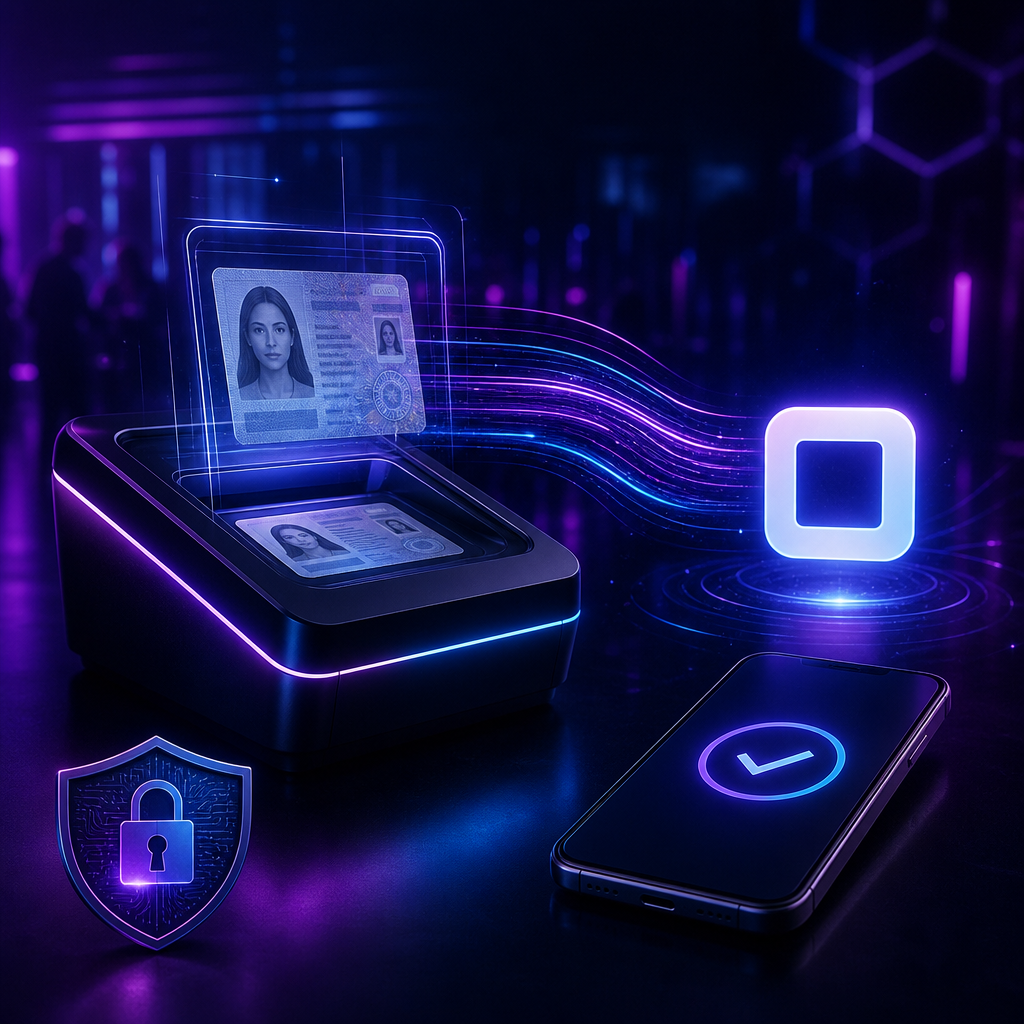
In person, the flow is short. The customer presents their mobile ID, taps or scans to transfer the data, your device authenticates it against the issuer in real time, you get the age or identity confirmation you need, and the transaction moves on. From the customer's side it feels like tapping to pay.
Remote verification, which matters for delivery, online ordering, and account setup, follows a similar shape. The customer initiates the share, the data moves over an encrypted channel, a liveness check confirms a real person is present rather than a photo, the document is validated, and identity is confirmed. The mechanics differ, but the trust model is the same underneath.
Security you can lean on
The reason mobile IDs can be trusted comes down to layers. The phone itself won't release the credential without a PIN or biometric unlock, so a lost phone isn't an open wallet. Each transaction is signed, the credential lives in a secure element rather than sitting around as a readable file, and the exchange uses tokens and end-to-end encryption instead of exposing raw personal data.
On the fraud-prevention side, the systems doing verification can lean on device attestation, certificate checking, and revocation status to confirm a credential is both genuine and still valid, plus risk scoring and anomaly detection to flag anything that looks off. It's the difference between trusting the light through a hologram and trusting math backed by the state that issued the license.
The rules are still catching up
The technology is ahead of the law in places, and that's the part worth watching. On the federal side, mobile REAL ID is in development, the TSA has been accepting mDLs at a growing list of airports, and federal agencies are working out interstate recognition and privacy requirements. The industry frameworks are maturing in parallel, with AAMVA guidelines, NIST security frameworks, and the ISO standard all pulling toward interoperability.
The friction is at the state level. Acceptance requirements, privacy laws, and data-retention rules vary from one state to the next, which is a headache if you operate across state lines. The safe move is to treat the standards, not any single state's app, as your foundation, so you're building on the part that's designed to travel.
Who this touches first
Age-restricted retail and hospitality feel it soonest. Instant, cryptographic age verification with clean audit trails is exactly what a bar, dispensary, or liquor store wants when compliance reporting and staff accountability are on the line, and the same scan can feed loyalty enrollment without a separate signup. Financial services get remote onboarding and stronger KYC without dragging customers into a branch. Healthcare gets more reliable patient identification for record access and insurance checks, and for controlled substances it supports the DEA and state monitoring requirements that come with prescription tracking. The common thread is that anywhere identity already carries legal weight, a verifiable digital credential removes guesswork.
Getting ready without overreacting
You don't need to rip anything out. The single most important trait to look for is hybrid verification, a platform that reads a mobile ID and a physical card with equal ease, because for years to come your customers will show up with both. A sensible path is to assess your current setup and pick technology this year, run a real pilot and train staff next year, and widen deployment as adoption climbs toward near-universal availability around 2026. Along the way, keep your staff trained not just on the taps and scans but on the security basics and how to handle the customer who has never used their phone this way before.
The most common way to get this wrong is to rush it, skip the training, and communicate poorly, then act surprised when the rollout stumbles. Pilot first, keep your fallback for physical IDs in place, and let people get comfortable. The payoff shows up as faster transactions, fewer errors, less fraud, and cleaner compliance records, which is a better return than any single flashy feature.
The bottom line
Mobile ID verification isn't a forecast anymore; it's already at the counter in a growing number of states, and the curve is only bending upward. The businesses that prepare calmly will hand their customers a faster, more private, more secure checkout, while the ones who ignore it will spend a rushed weekend catching up when a wallet full of digital licenses walks in.
ID Verify is built for exactly this stretch of the transition. It reads the physical cards you scan today and the mobile credentials your customers are starting to carry, so you're ready for whatever form of ID shows up next without betting on which one wins. If you'd rather grow into the shift than get caught by it, that's a good place to start.